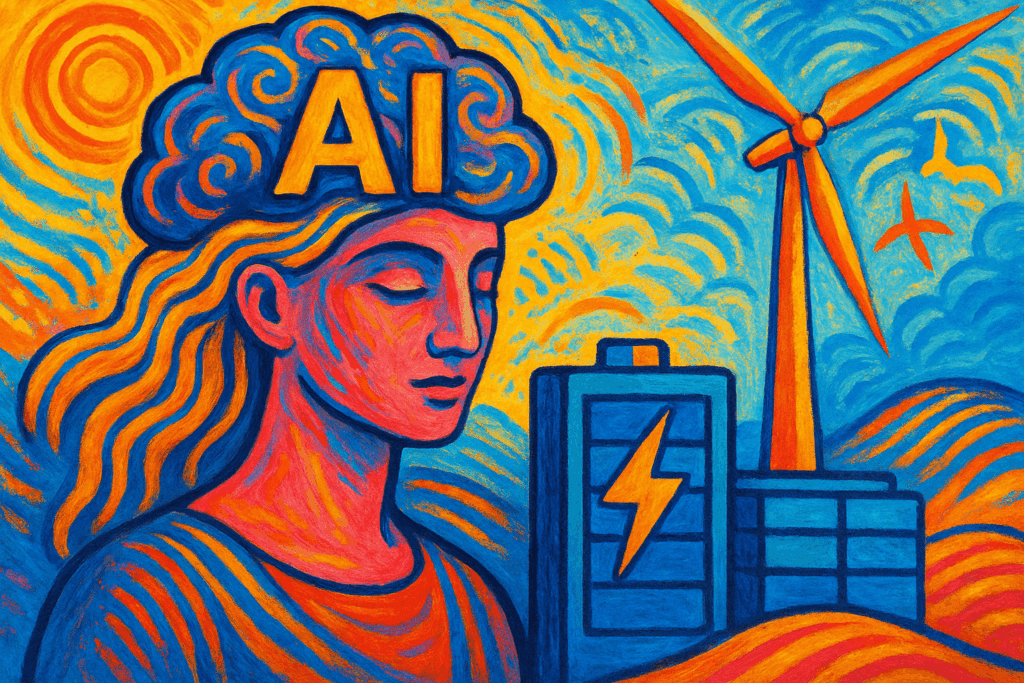
BlackRock and other institutional voices are now framing a clear link between rapid AI adoption and a step-change in electricity demand. That relationship is redefining priorities for renewables, storage, and policy makers who must align markets with a more electrified economy.
AI Accelerates Global Energy Demand
Large AI models and hyperscale data centers require steady, high-density power. Combined with broader electrification across transport and industry, this raises peak and baseload needs in regions hosting compute clusters. The result is stronger demand for low-carbon generation and flexible capacity that can be dispatched to match steep ramps in consumption. For investors and system planners, the opportunity is to pair new renewable build with predictable, contractable off-take and grid services from flexible assets.
Energy Storage: The Key to Grid Stability
Intermittent wind and solar will only scale if storage can absorb variability and supply duration when the sun and wind are low. Short-duration lithium-ion batteries already supply frequency response and peak shaving. Longer-duration technologies, including flow batteries and hydrogen-linked storage, are maturing for multi-hour to multi-day needs. Vehicle-to-grid systems can aggregate distributed batteries to supply local grid services and defer network upgrades. Policy signals that reward capacity value, fast response, and lifecycle management for batteries will speed deployment and reduce system costs.
Policy and Geopolitics Shape the Energy Future
Policy tools matter: manufacturing incentives, standardized interconnection rules, targeted procurement, and streamlined permitting all lower barriers for storage and green infrastructure. Geopolitical shifts are reshaping supply chains for critical minerals and semiconductors, prompting onshoring and diversified sourcing strategies. That creates both risks and investment windows as markets fragment and resilience becomes a priority. Strategic considerations for stakeholders include aligning capital with credible policy frameworks, hedging technology exposure, and working with grid operators to value flexibility services.
BlackRock’s perspective frames these trends as interlinked: AI-driven demand increases the value of flexible, low-carbon supply and storage, while policy and geopolitics determine who captures the economic returns and how quickly systems transform.