
The AI Energy Paradox: A Growing Demand
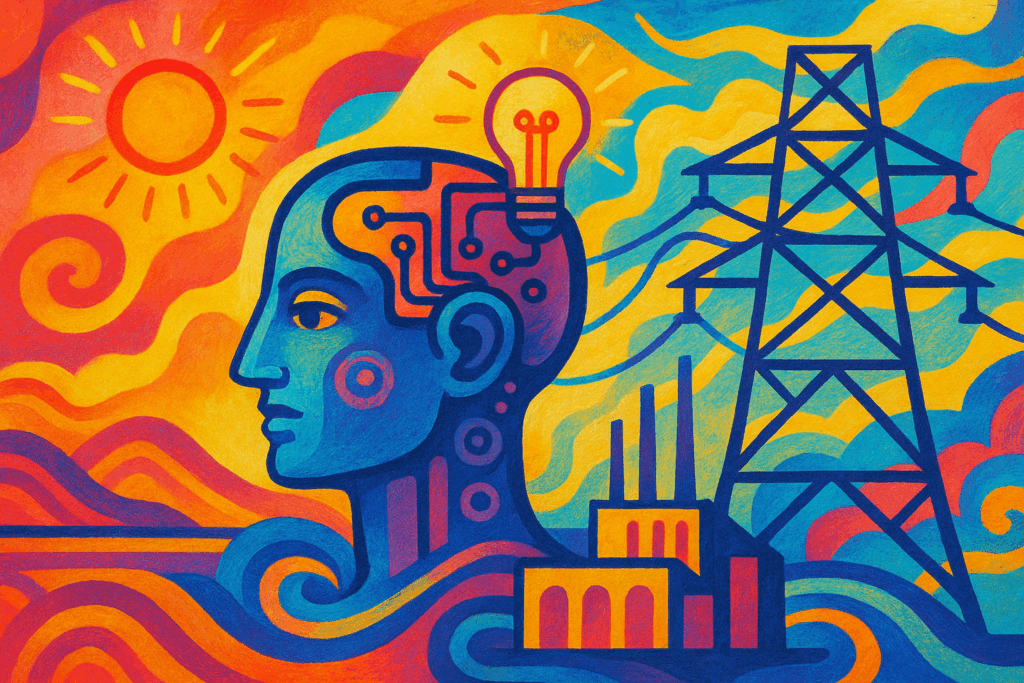
Artificial intelligence workloads are scaling at an extraordinary rate. Large model training and inference at hyperscale now require sustained, high-density power allocations inside data centers. While global data centers already account for a meaningful share of electricity use, AI-specific compute is growing faster than many forecasts, with individual model trainings sometimes consuming from megawatt-hours to hundreds of megawatt-hours depending on scale and repetition.
Straining the Grid: Challenges Ahead
That growth poses multiple pressures. Local grid capacity can be exceeded by concentrated AI campuses, forcing upgrades that are expensive and slow. Variability in renewables complicates continuous, high-power compute. Emissions remain a concern when compute runs on fossil-heavy grids. Thermal management and peak demand spikes also create operational and regulatory stress for utilities and operators.
Powering AI Sustainably: Emerging Solutions
Operators and vendors are deploying combined approaches to lower the footprint and cost of AI. Key strategies include:
- Renewables plus storage: Pairing on-site solar or wind with batteries and long-duration storage stabilizes supply for sustained AI workloads.
- Demand flexibility: Shift training schedules, use demand-response programs, and employ workload orchestration to avoid peak charges and balance the grid.
- Cooling innovation: Liquid and immersion cooling cut energy used for thermal control and enable higher rack densities.
- Chip and software co-design: Purpose-built accelerators, sparsity-aware model architectures, and compiler-level optimizations reduce compute per task.
- Heat reuse: Waste heat capture for district heating turns loss into a local energy asset.
The Path Forward for EnergyAI Insiders
Technological progress and smarter infrastructure planning can keep AI growth aligned with carbon goals. Success will depend on coordinated investment by cloud providers, grid operators, and policymakers to expand renewables, modernize grids, and incentivize efficient hardware and operations. For energy and AI leaders, the priority is pragmatic deployment of the solutions above and continuous measurement of actual energy intensity per model. EnergyAIInsiders.com will track deployments, policy shifts, and hardware advances to help organizations make decisions that balance performance and sustainability.