
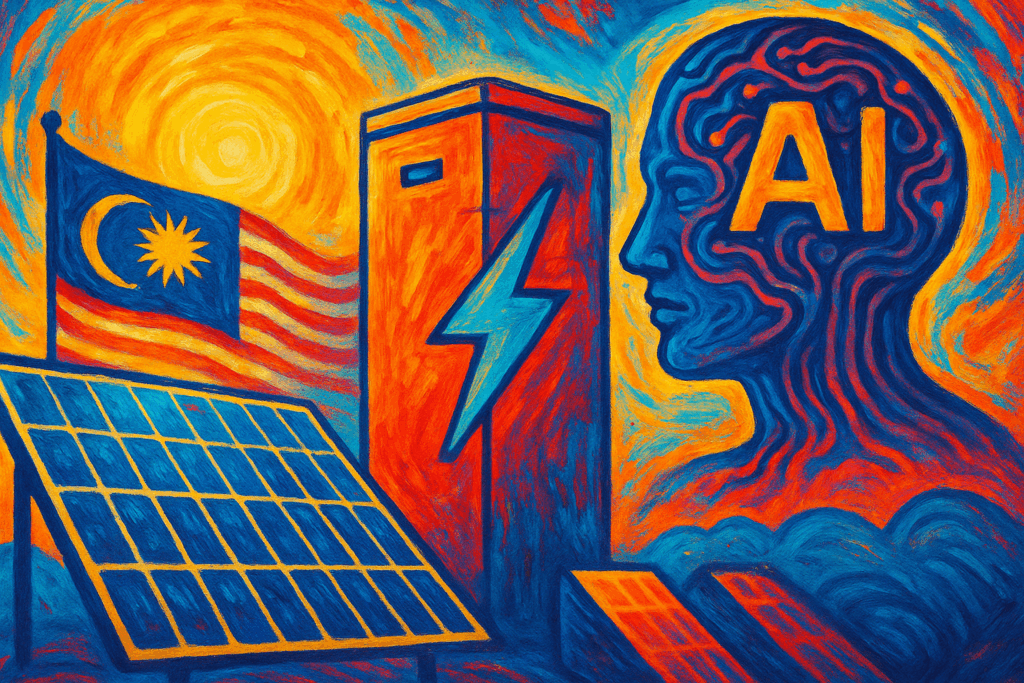
Malaysia is shifting from high solar penetration to managed solar-plus-storage deployment to stabilize the grid and meet long-term renewable goals. Policy updates link procurement, technical standards and environmental safeguards to ensure storage is built alongside utility-scale solar.
Malaysia Leads with Mandatory Solar & Storage
High solar shares in recent large-scale solar (LSS) awards have created a steep afternoon surplus and a pronounced duck curve. To address this, the government plans to require Battery Energy Storage Systems for upcoming LSS rounds while pursuing a 70% renewable energy target by 2050. The move targets smoother ramping, reduced curtailment and improved system resilience as variable generation grows.
Policy & Market: Paving the Way for BESS
Key programs driving the shift include LSS, MyBEST, CRESS and Solar ATAP. The MyBEST tender specifies roughly 400 MW of capacity paired with 1,600 MWh of storage, signaling a procurement model that treats BESS as an integral element of new solar capacity. Regulators are coupling tenders with environmental rules, safety standards and quality metrics for cells, packs and installations to mitigate fire and disposal risks.
Market forecasters project Malaysia’s BESS market to grow from about USD 3.1 billion to nearly USD 9.8 billion over the next decade. That creates opportunities across EPCs, battery manufacturers, grid services aggregators and financing platforms.
The AI Edge in Energy Management
Mandatory storage opens a market ripe for AI-driven Energy Management Systems. AI can optimize state-of-charge strategies, coordinate multiple BESS for frequency response and peak shaving, and orchestrate solar, storage and demand signals for market participation. Predictive maintenance powered by machine learning reduces downtime and lifecycle costs, improving total project returns.
Rising demand from data centers and electrification trends accelerates the need for smart storage that can respond in real time. Malaysia’s policy path offers a model for other markets seeking to pair renewables with intelligent storage and software-first grid operations.
For investors, operators and technology providers, the combination of procurement certainty, regulatory standards and AI-ready storage requirements creates a clear commercial runway in Southeast Asia.