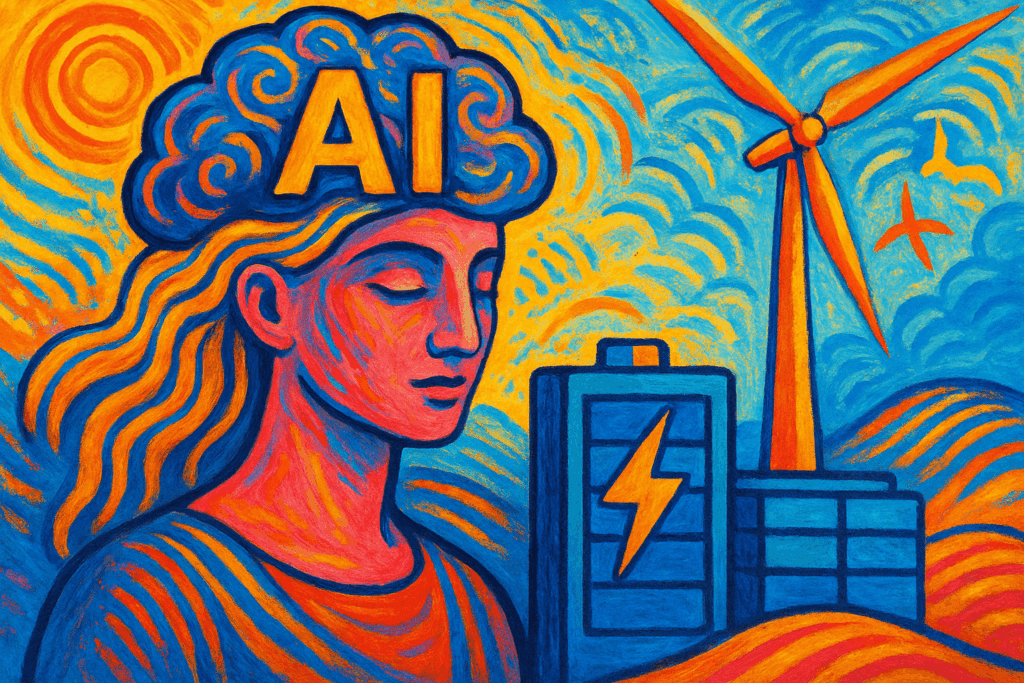
Artificial intelligence is turning energy storage from a static buffer into an active grid asset. By pairing batteries and other storage technologies with intelligent control, operators can reduce curtailment, balance supply and demand, and support higher shares of renewables. Policy choices will determine how quickly these systems scale and how effectively they serve decarbonization and reliability goals.
AI’s Impact on Energy Storage
AI layers advanced analytics and control on top of storage hardware, allowing systems to respond to grid conditions in real time. Machine learning models predict generation and load, while control algorithms optimize dispatch to capture value across energy and ancillary markets.
Optimizing Grid Reliability
AI improves forecasting for wind and solar, tightening dispatch schedules and reducing forecast error that leads to stress on the system. Predictive maintenance models extend asset life by identifying battery degradation early and scheduling interventions before failures. Demand response driven by AI can shift flexible loads to match storage discharge windows, easing peak stress. Together these capabilities make grids more resilient, shorten outage recovery times, and lower operational costs by avoiding inefficient cycling and unnecessary reserves.
Policy Fuels Storage Innovation
Technology alone will not reach scale without targeted policy. Governments and regulators can design rules and incentives that reduce investment risk, open markets for stacked services, and mandate interoperability between AI platforms and grid operators.
Regulatory Support for AI Integration
Effective policy tools include tax credits and grants focused on AI-enabled storage pilots, regulatory sandboxes that allow testing of novel market participation models, and streamlined permitting for co-located storage plus renewables. Market reforms that value fast-response services, such as frequency regulation and synthetic inertia, create revenue streams that justify AI investments. Standards for data exchange, cybersecurity requirements, and transparent performance metrics build trust among utilities and investors. Public procurement and competitive innovation programs can seed early deployments while workforce training initiatives address the skills gap needed to operate AI-driven systems.
Future Outlook and Opportunities
When policy aligns with technology, AI-enhanced storage will reduce curtailment, lower system costs, and accelerate renewable integration. The coming decade offers opportunities for coordinated regulatory frameworks, cross-sector pilots, and scaled financing that together can unlock the full value of intelligent storage for cleaner, more secure electricity systems.