Google’s Landmark Acquisition: Fueling AI with Direct Energy Ownership
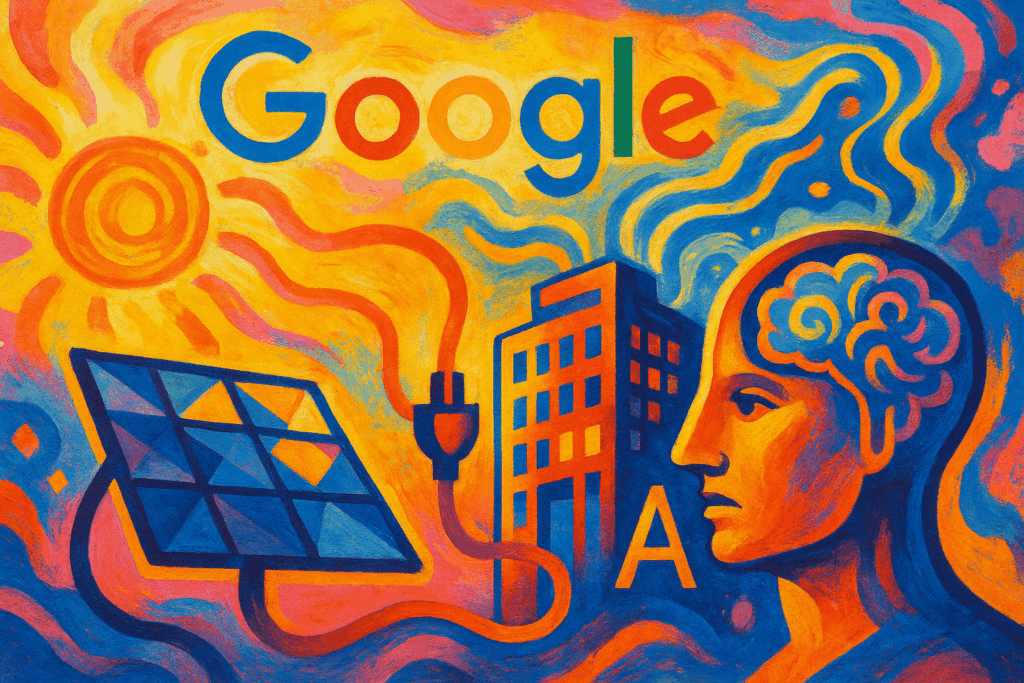
Alphabet subsidiary Google agreed to buy Intersect Power for about $4.75 billion, acquiring a portfolio that includes roughly 2.2 GW of solar and 2.4 GWh of battery storage. The rationale is clear: hyperscale AI compute is expanding rapidly, and traditional procurement through power purchase agreements has become slower and less reliable for meeting real-time capacity and location needs. Ownership gives Google direct control over generation and storage timing, capacity scaling, and site selection to serve AI workloads at scale.
The “Energy Park” Strategy: Bypassing Grid Bottlenecks
Google’s model is to develop co-located energy parks that place utility-scale solar and batteries on the same site as hyperscale data centers. Operating behind the meter, these parks can deliver power directly to compute facilities without waiting in congested interconnection queues or relying on long transmission builds. That reduces exposure to curtailment risk, intermittent supply mismatch, and delays from grid upgrades. For AI deployments that demand predictable, high-density power, on-site generation plus storage accelerates project timelines and preserves site-level reliability.
Policy Implications for AI Energy Systems and Grid Evolution
The move exposes persistent frictions in energy policy and grid planning. Interconnection queues, outdated transmission planning, and siting constraints are prompting large consumers to vertically integrate. Regulators will face pressure to rethink queue reform, cost allocation for transmission expansion, and the regulatory status of behind-the-meter utility-scale parks. The acquisition sets a precedent: other Big Tech firms with heavy AI loads may follow, shifting utility business models and market signals for renewables and storage.
Policymakers must balance faster deployment incentives with systemwide reliability and fair market access. Expect debates on permitting fast-track options for AI-energy projects, revaluation of distribution-level interconnection rules, and scrutiny of market concentration when major cloud providers own generation assets. Google’s purchase is more than an asset transfer; it signals a strategic rewiring of how AI scale meets energy supply, with broad consequences for grid investment and regulatory design.