AI’s Accelerating Energy Demands
Artificial intelligence workloads and sprawling data centers are driving rapid growth in electricity demand. Estimates referenced by industry leaders foresee a multiple-fold increase in power needs for large-scale training and inference, with some projections suggesting roughly a fivefold rise in certain AI-related consumption over the coming decade. Data center compute, cooling, and redundancy requirements intensify peak loads and shift patterns of grid use.
The Dual-Track Imperative: Hydrocarbons Meet Renewables
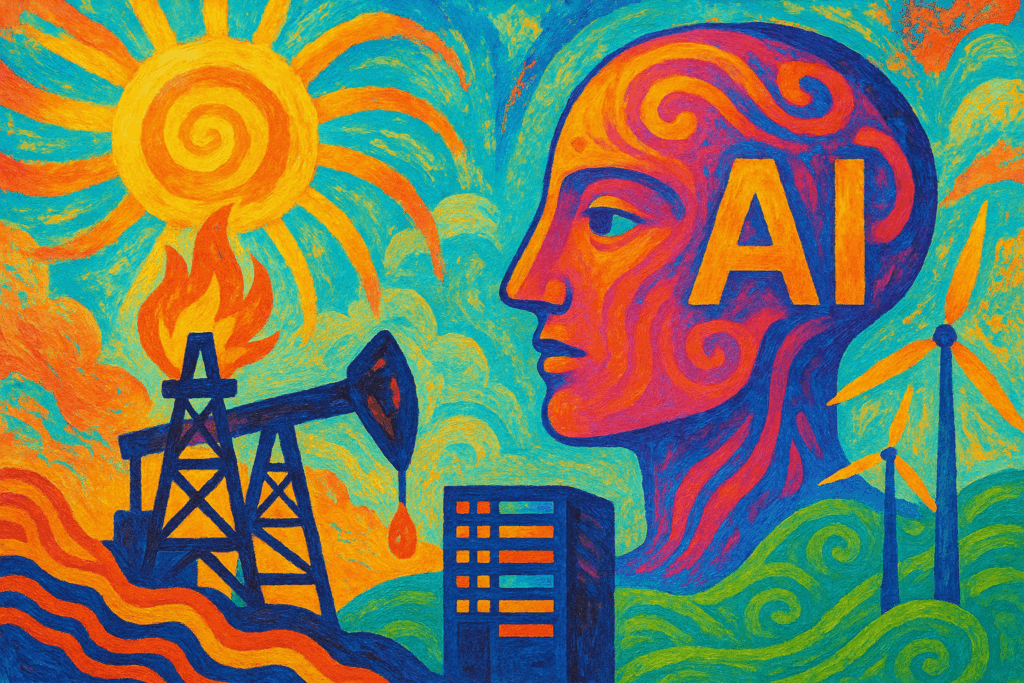
Major energy and technology stakeholders argue that meeting AI’s growing hunger for power will require both expanding renewables and retaining reliable hydrocarbon capacity. Renewables such as solar and wind are scaling fast and lowering marginal generation costs. At the same time, hydrocarbons including natural gas and existing oil-derived infrastructure provide dispatchable energy, fast ramping and grid stability when intermittent generation falls short. In markets where ADNOC and Masdar coordinate policy and projects, the UAE is formalizing this balanced approach.
Investing in Future Energy Stability
Practical implementation of a dual-track strategy involves long-term planning for transmission upgrades, flexible gas-fired plants, storage solutions, and power purchase agreements that underwrite new renewable projects. Masdar’s renewable targets and Abu Dhabi’s investments illustrate how policy-led commitments and industrial partners can mobilize capital. Clear regulatory signals, targeted incentives, and infrastructure build-out are needed to align supply with the unique load shapes of AI workloads.
Charting the Course for Energy-Intensive AI
AI itself will be part of the solution. Advanced ML models can improve demand forecasting, optimize dispatch, coordinate distributed storage and perform predictive maintenance across grids and plants. For investors and policymakers, the takeaway is strategic: combine firm, dispatchable sources with rapidly expanding renewables, invest in grid flexibility, and use AI tools to squeeze efficiency from both supply and demand. That combined path offers the best chance to power AI reliably while lowering carbon intensity over time.