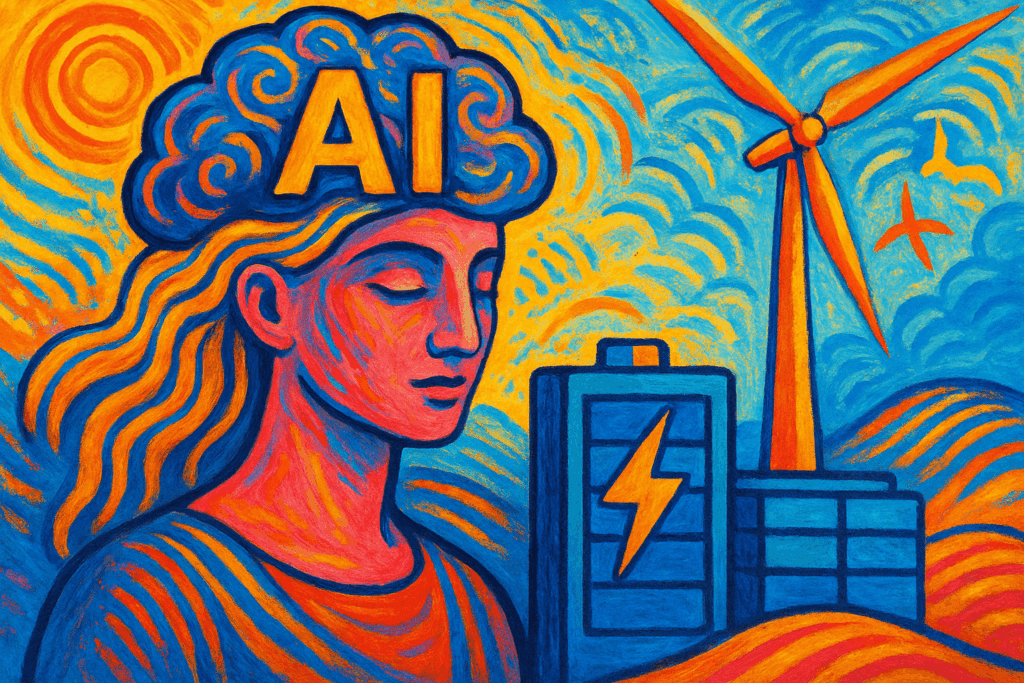

The rapid growth of variable renewable generation and the surging electricity needs of large-scale AI compute are reshaping power systems. Industry leaders, investors and policymakers must reconcile seasonal and sub-hourly variability with the always-on demands of data centers while keeping decarbonization on track.
Key Shifts in Energy Supply
Renewables Ascend
Solar and wind now contribute a substantially larger share of electricity in many markets, in some cases outgenerating coal. That change lowers emissions but raises operational challenges: output profiles are weather-dependent and require greater operational flexibility across transmission and distribution systems.
Storage’s Growing Role
Battery storage has matured for short-duration use, but long-duration energy storage (LDES) is becoming more important to provide multi-hour to seasonal firming. LDES options such as pumped hydro, compressed air, flow batteries and hydrogen derivatives increase system resilience by shifting large volumes of low-cost renewable energy to periods of high demand or low output.
The AI Power Imperative
Hyperscale AI data centers demand steady, low-carbon power and fast ramping to match compute cycles. That demand is accelerating investment in flexible firm capacity, colocated storage, grid upgrades and long-term power contracts. AI operators are increasingly part of procurement strategies that value reliability and carbon intensity as much as price.
Policy and Grid Resilience
Policy measures can unlock faster deployment of storage and transmission: targeted incentives, market designs that value flexibility and capacity, streamlined permitting, and clearer rules for grid interconnection. Regulatory reforms that price ancillary services and capacity properly will attract private capital into LDES and low-carbon firm resources.
Building a Net-Zero Future
Meeting net-zero goals requires coordinated planning across generation, storage and demand-side actors. Priorities are scaling LDES, reforming markets to reward flexibility and reliability, integrating AI loads through smart procurement, and investing in transmission. Together these steps will support a reliable, low-carbon grid that serves both renewable growth and the energy-intensive future of AI.