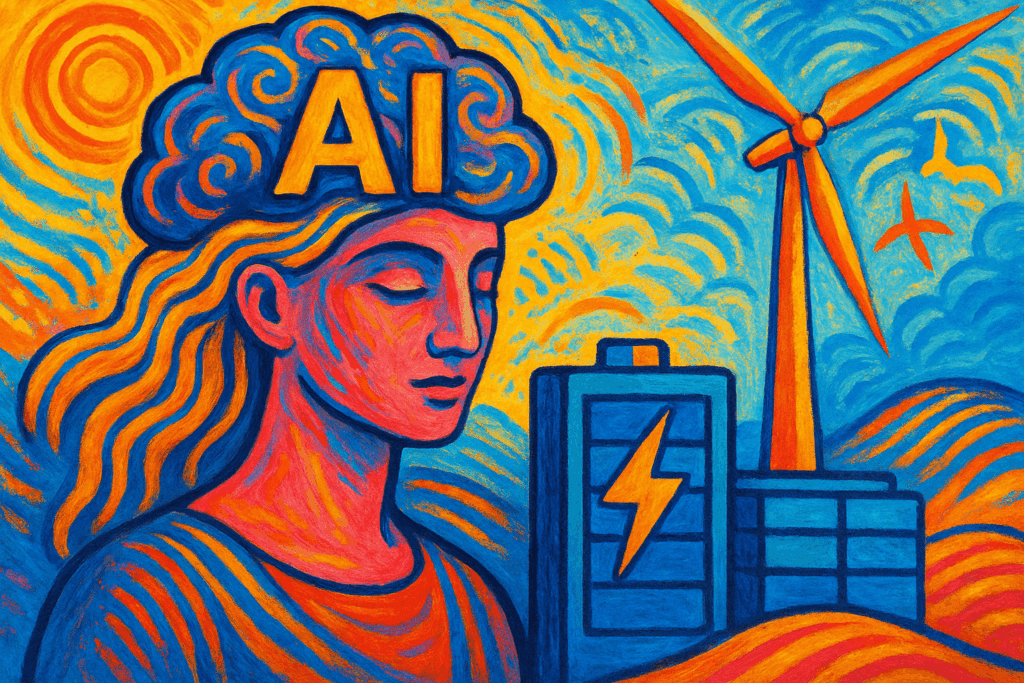

AI workloads are expanding quickly and placing new demands on power systems. For energy and AI leaders, the question is no longer only about compute. It is about how policy, grid planning, and storage solutions work together to deliver reliable, low-carbon power for next generation AI.
AI’s Growing Energy Footprint: A Collective Challenge
Data centers already account for a measurable share of global electricity use, and AI training and inference workloads are growing faster than average. Large models require extended high-power runs, increasing peak demand and raising costs for operators and grids. Without coordinated action, capacity strain and carbon lock-in will rise along with compute ambition.
Shared Accountability for Sustainable AI
Beyond Hyperscalers: Policy and Partnerships
Governments, utilities, hyperscalers, and storage providers must align incentives and standards. Policy levers include streamlined interconnection, time-of-use tariffs, procurement rules that value low-carbon dispatchability, and public funding for grid upgrades. Public-private partnerships can fund regional storage and transmission projects that support concentrated AI loads while unlocking more renewables.
Enterprise Responsibility: Optimizing AI Workloads
Enterprises can lower their energy footprint through model efficiency, workload scheduling to off-peak windows, and lifecycle discipline for data and models. Procurement practices should favor colocated renewables and storage. Participation in demand response and capacity markets converts AI flexibility into grid services and revenue, reducing both emissions and total cost of ownership.
Integrating Storage and Strategy for Resilient AI
Energy storage is the practical bridge between intermittent renewables and high-demand AI compute. Battery energy storage systems, long-duration technologies, and onsite microgrids can shave peaks, provide fast frequency response, and guarantee backup during outages. Strategic deployment means colocating storage with data centers, enabling time-shifted renewable usage and reducing reliance on fossil peaker plants.
Policy should recognize storage as infrastructure. Incentives, streamlined permitting, and valuation of firm low-carbon capacity will accelerate deployment. For AI operators, a storage-first strategy combined with operational competence in demand management turns risk into strategic advantage.
EnergyAIInsiders.com encourages leaders to treat AI energy as a systems problem: align policy, invest in storage, and adopt operational controls so AI growth advances without undermining grid resilience or sustainability.