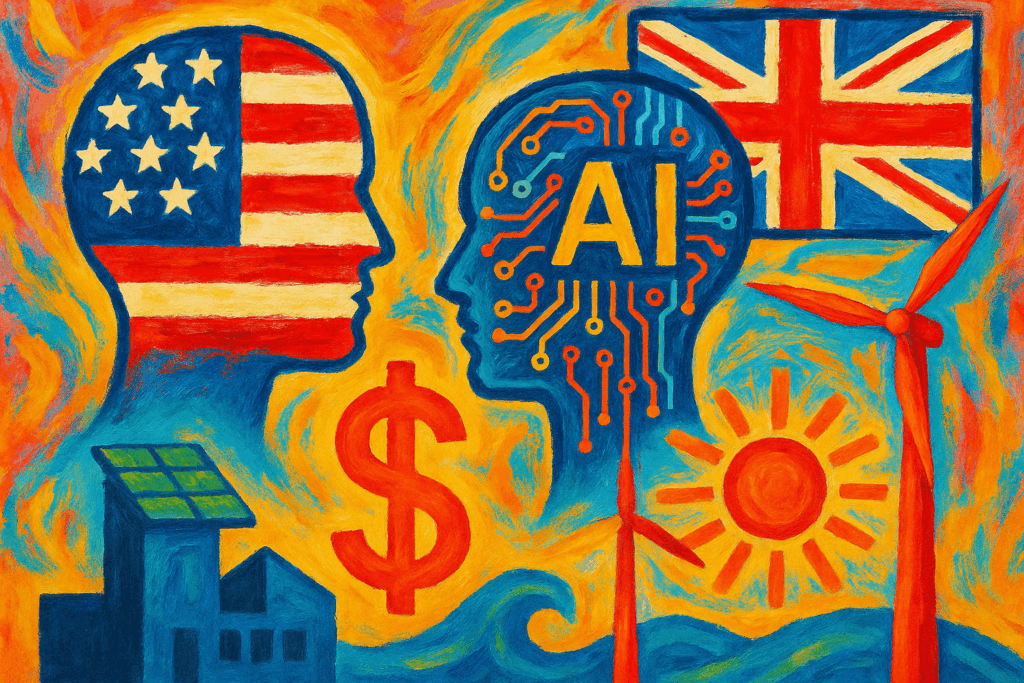

Artificial intelligence is moving from lab experiments into core energy operations. For oil and gas producers, utilities, and renewables operators, generative AI offers productivity gains in research, software automation, and analytics while exposing operational risks that must be managed.
Generative AI: Powering Energy Innovation
Large models such as Anthropic Claude, Google Gemini, Microsoft Copilot, and OpenAI GPT models are already used for technical literature review, code generation for bespoke software, automated reporting, and rapid hypothesis generation. Field teams use models to summarize sensor logs, generate diagnostic scripts, and accelerate root cause analysis. SaaS providers embed these models into workflows for predictive maintenance, model-based simulation, and scenario planning. Improvements in model quality and better grounding techniques have reduced misleading outputs, but verification is still required for high-stakes decisions.
Navigating AI Adoption: Key Challenges for Energy Companies
Pilot projects reveal consistent operational hurdles. Poor data quality across SCADA, historian, and asset management systems erodes model accuracy and user trust. Incomplete labels, inconsistent schemas, and siloed data pipelines make reproducible results difficult. Teams often struggle to build clear business cases because benefits are diffuse and hard to quantify without production-grade pilots.
Talent shortages remain a barrier. Energy firms need engineers who combine domain expertise with MLOps and prompt engineering skills. Where internal talent is limited, partnerships and targeted hiring for model validation, data engineering, and secure deployment accelerate progress.
Practical Considerations for Effective Integration
Run focused pilots with measurable KPIs, invest in data governance and labeling, and adopt human-in-loop validation to catch hallucinations and misleading outputs. Prioritize use cases with fast feedback loops such as anomaly detection and report automation before moving to control-room decision support. Build small cross-functional teams that pair field engineers with ML specialists to translate technical models into operational value.
AI can materially change how energy infrastructure is operated, but realizing that value requires disciplined data practices, measurable pilots, and skilled teams that bridge models and operations.