
Envision’s Dubhe: Orchestrating AI for Renewable Energy
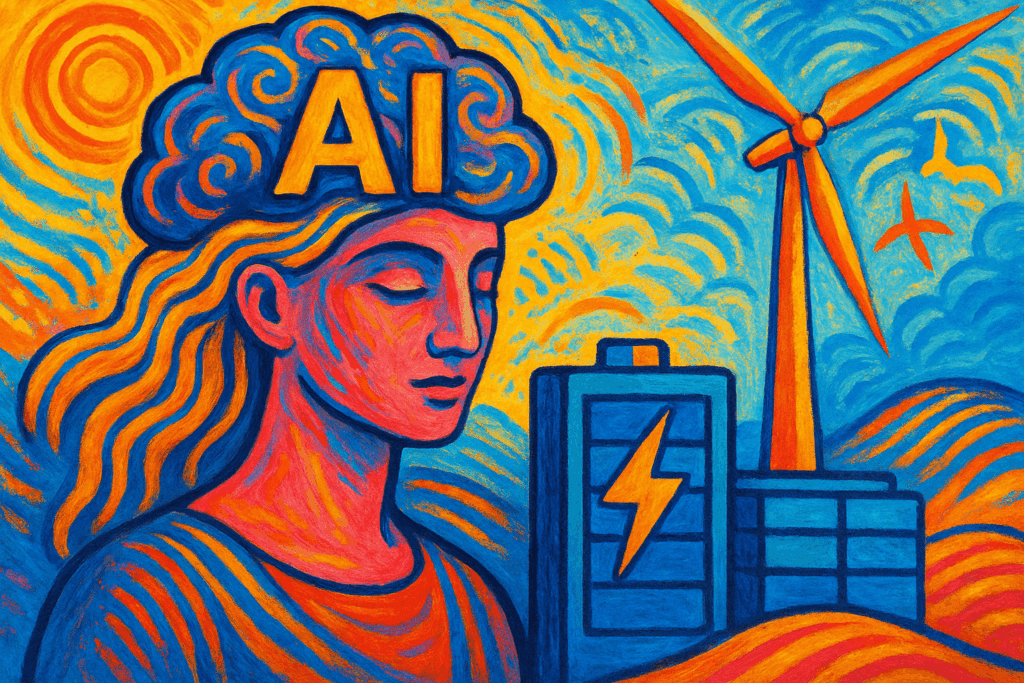
Envision has launched Dubhe, an energy foundation model designed to operate as a Physical AI layer for real-time orchestration of renewable generation, storage, grids, and demand. Dubhe aims to unlock higher renewable penetration by coordinating assets at fleet and grid scale, lowering operational costs and improving dispatch reliability.
Physical AI in Action: Governing Energy Systems
Physical AI refers to models that do more than predict. They directly govern physical systems through closed-loop control, continuous telemetry, and rapid feedback. Dubhe pairs model-based control with ensemble forecasts such as Envision’s Tianji weather system to adapt operations to changing conditions. Compared with traditional digital AI that focuses on analytics and planning, Physical AI takes responsibility for dispatch decisions, reserve allocation, and stability controls in near real time, improving efficiency and reducing deviations between forecasts and actual output.
Strategic Alliances Accelerate Deployment and Storage Integration
Envision’s strategic partnership with Masdar targets large-scale deployment across regions with high renewable potential. The collaboration focuses on wind, green hydrogen and importantly energy storage. Pilots and deployments in Masdar projects will test co-optimization of batteries with variable generation, aggregated asset controls, and commercial-scale validation of autonomous operation.
Implications for Energy Storage and Policy Development
Dubhe contributes to storage integration by optimizing charge-discharge cycles, reducing battery wear through smarter state-of-charge management, and orchestrating storage as a multi-service asset: energy shifting, frequency response, and congestion relief. These capabilities lower total system cost and make firm renewable capacity more predictable.
For policy makers the rise of Physical AI demands updated frameworks: certification for autonomous controllers, market rules that recognize AI-managed multi-service assets, data governance and cybersecurity standards, and procurement models that value operational intelligence. Properly regulated, AI-driven systems like Dubhe can accelerate the energy transition while maintaining grid resilience and investor certainty.
In short, Dubhe represents a pragmatic step toward an intelligent, storage-friendly grid that aligns operational control with policy and market design.