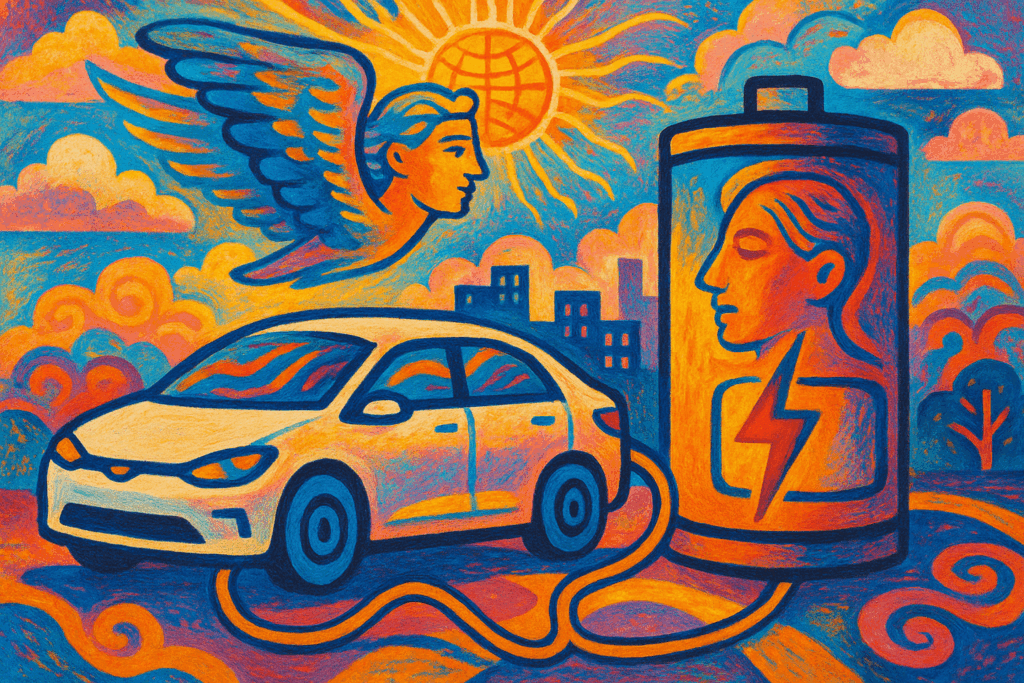
Parked electric vehicles represent a vast, underused resource for power systems. As EV adoption accelerates, fleets of batteries at homes, workplaces, and public chargers can act as distributed energy storage. Artificial intelligence and advanced modelling are the tools that make two-way vehicle-to-grid (V2G) operations reliable, fair to owners, and beneficial for grid stability.
Unlocking Grid Potential with V2G
V2G or V2X refers to bidirectional charging where EVs provide stored energy back to the grid or to local loads. At scale, millions of parked EVs could supply balancing capacity, frequency response, and local congestion relief. Demonstrations like the European DriVe2X project, tested across Budapest, Porto, and the Isle of Wight, show how coordinated fleets can support grids during peak events and special use cases such as stadium match days.
AI’s Role in Battery Longevity and Trust
Primary concerns for owners are battery degradation and unpredictable availability. AI-driven battery models use telemetry, historical behaviour, and thermal dynamics to forecast state-of-health and to plan charging profiles that limit wear. Machine learning optimises charging windows to meet driver needs while scheduling discharge for grid services when impact on lifetime is minimal. Transparent user interfaces, real-time guarantees, and automated compensation algorithms help build trust and higher participation rates.
Paving the Way for Mass V2G Adoption
Technical feasibility alone will not deliver mass adoption. Policy alignment, common interoperability standards, and uniform grid codes are needed so vehicles, chargers, aggregators, and system operators exchange data and settle value consistently. Pilots should pair AI orchestration with consumer-centric incentives and clear liability frameworks. When regulators, utilities, and manufacturers converge on standards, AI-managed EV fleets can become the distributed storage backbone for high-renewable grids.
In short, AI and advanced modelling convert fleets of parked EVs into predictable, low-impact storage assets. Combined with policy reform and user-focused business models, V2G can deliver flexible capacity, support renewables integration, and open new revenue streams for drivers and operators.